

Bicycle Network: Teachers
Articles & studies
Active travel friendly schools help students reach their academic potential
Walking to school could reduce stress reactivity in kids
Banning bikes from schools not the answer
Children Living in Active Neighbourhoods Study
Active travel friendly schools help students reach their academic potential
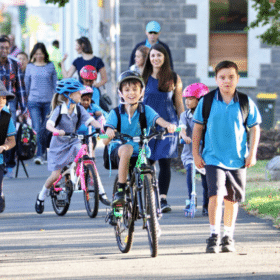
Over the past decade, substantial changes in lifestyle, transportation systems, family structures and urban environments have led to a change in physical activity patterns among Australian children. In particular, active transport has declined dramatically with car travel levels on the increase. In the 1970s, active travel was a social norm, with 80% of children walking or cycling to school. Today, only 20% of children actively travel to school and less than 5% are riding bikes. The first step to reversing this trend is to create active travel friendly school communities.
While there is an important focus on the health and well-being benefits of physical activity attained through active travel, there are extensive developmental benefits for children which contribute to health more broadly. Not only does walking or cycling to school benefit children’s physical health, but evidence shows being allowed to travel actively to school makes children better students. Experts agree that physical activity gained through being independently mobile has been shown to boost academic performance in children and create a greater desire to learn.
There have been fourteen published studies analysing data from approximately 58,000 students between 1960 and 2006 which have investigated the link between physical activity and academic performance. Eleven of these studies found a positive association between independent mobility and academic performance.
Studies show that physical activity allows kids to burn off pent-up energy which creates a calming effect while increasing blood flow to the brain. Kids arrive at school with higher concentration levels and a greater ability to absorb and interpret curriculum. The best results have been seen following exercise. The Australian SHAPE study investigated the effects of daily physical activity on the health of South Australian primary school students and found a significant improvement in student attitudes, discipline, behaviour and creativity following physical activity.
Allowing children the opportunity to actively and independently travel to school (and beyond) fosters independence and responsibility, in turn building the child’s confidence, self-esteem and social skills. Developing these attributes in our children enhances their ability to meet the challenges encountered during school and beyond. In teenagers, self-esteem tends to decline during adolescence. Research has found that being physically active may help youth overcome this difficult period by working to enhance self esteem levels, allowing them to better focus on their studies.
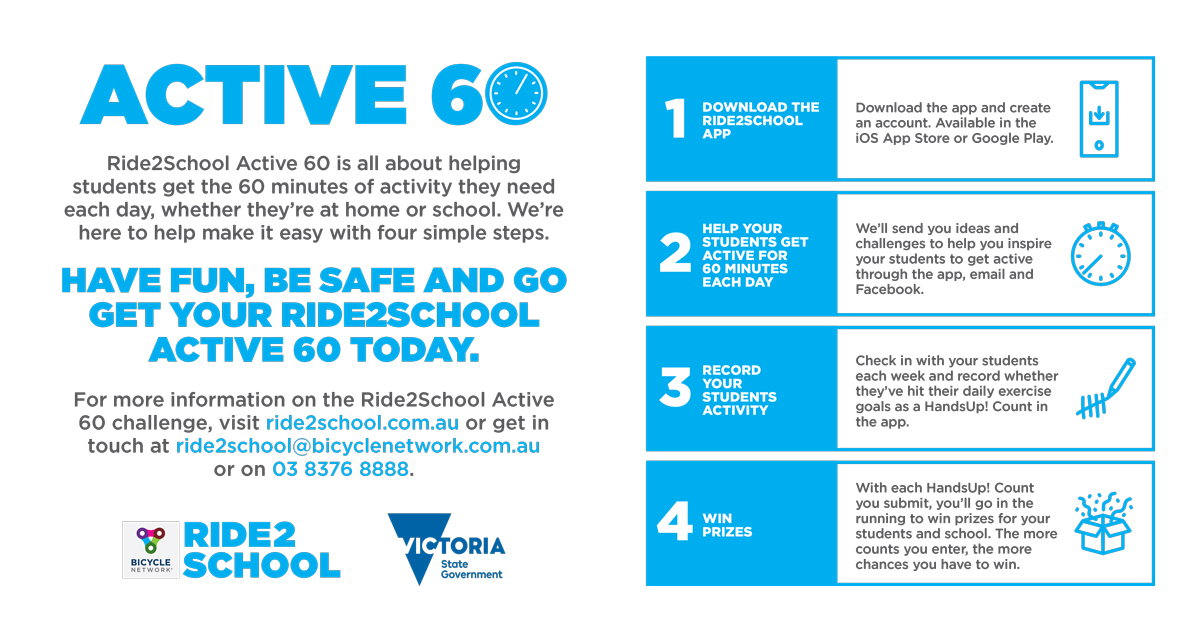
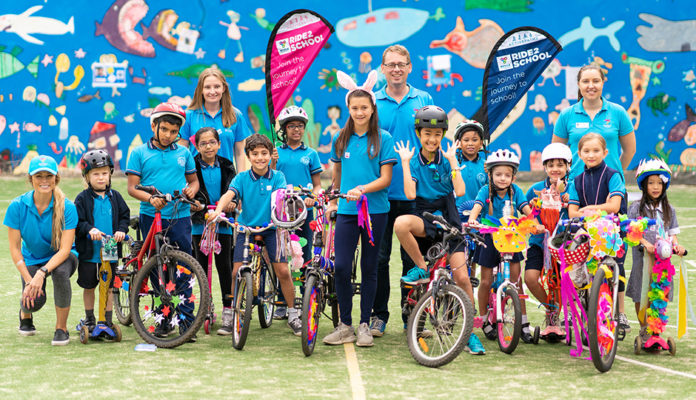
Australian school environments are designed to encourage children to reach their full academic potential. Schools that embrace an active travel culture optimise the opportunity for their students to lead healthy lives while developing important life skills and contributing to academic success. The Ride2School program at Bicycle Network Victoria is designed to make walking and riding normal for kids. The Ride2School team offers practical, and, wherever possible, tailored strategies, guidance and advice to schools who want to improve the health and learning outcomes of their students.
To find out more about the program that reaches 2,000 schools and over 700,000 students nationally visit www.ride2school.com.au or call (03)8376 8888 to speak to a Ride2School team member.
Walking to school could reduce stress reactivity in kids
A simple morning walk to school could reduce stress reactivity in children during the school day, curbing increases in heart rate and blood pressure that can lead to cardiovascular disease later in life, according to a new University at Buffalo study.
Download the full article here.
Banning bikes from schools is not the answer
Todd Harper, CEO of VicHealth, explains how active travel rates have decreased and the number of obese students has increased. Having ‘no bike policies’ in schools makes it harder for kids to lead an active lifestyle, not easier.
Read the full article 'Banning bikes from schools not the answer'.
Children Living in Active Neighbourhoods study
This study examines the factors that affect this important behaviour, and examines how these influences affect children as they get older.
The Children Living in Active Neigbourhoods (CLAN) study consisted of involving students and parents across metropolitan Melbourne in surveys to examine active commuting behaviours as well as the personal, social and environmental behaviours affecting active commuting.
The study found that considerable improvements can be made as only about one quarter of children actively commuted at least once per day. It was also found that boys walked or rode to school more than girls.
The study followed children growing up and found that children improved their active travel behaviour, providing that barriers of inadequate infrastructure were removed.
Barriers noted include: personal (i.e. not having the energy), social (i.e. not having friends who walk/ride) and environmental (i.e. heavy traffic).
The CLAN study supports the need for effective programs like Ride2School that target active travel among children.